
Affiliate note: Some links on this page are affiliate links. If you book through them, BookOutdoorTrips may earn a commission at no extra cost to you. This does not affect our editorial judgment. Learn more.
Quick decision: Choose a Nusa Penida snorkeling tour by where you start, how confidently you swim in open water, and what happens if the manta stop is unsafe—not by a photograph of a ray. Travelers already on Penida can compare shorter local Manta Bay and longer Manta Point outings. Bali-based travelers need to decide whether ferry tickets, return transport and a full day of connections are worth a relatively short snorkeling session. If currents, seasickness or uncertain swimming ability are serious concerns, consider a condition-appropriate sheltered reef outing or stay out of the water.
Manta rays draw people to the waters around Nusa Penida, but a wildlife encounter is never a confirmed part of a ticket. The Indonesian tourism authority’s snorkeling overview identifies Manta Point and Crystal Bay among the island’s marine sites; the two offer quite different reasons to go. More importantly, MyBaliTrips’ Bali-departure snorkeling listing explicitly says it does not guarantee manta sightings and may substitute another stop when conditions are unfavorable. That possibility should shape the purchase before any talk of underwater photographs.
First choose your starting point, not your advertised snorkeling spot
Two similar-looking listings can be different travel days. One begins after you have reached Nusa Penida; another starts with a Bali ferry connection and ends only after you return. A boat ride measured in hours is not necessarily the number of hours you spend swimming.
| Booking format | What the named listing actually provides | Best-fit traveler | Check before paying |
|---|---|---|---|
| Local group trip: Manta Bay | MyBaliTrips’ Penida-starting listing shows an approximately two-hour group option. The example itinerary describes three snorkeling stops, mask, snorkel, fins, boat and English-speaking guide. | Already on Penida, comfortable in the sea, prioritizing snorkeling over transport. | Exact island meeting point, final stop list, flotation support, currents and transfer excluded from the ticket. |
| Local Manta Point option | The same merchant listing displays a separate three-hour group option identified with Manta Point. | Confident swimmer prepared for a more exposed marine outing when the operator allows it. | Whether Manta Point is reachable on your date, boat return arrangements and acceptable substitutions. |
| Snorkeling day trip from Bali | A different MyBaliTrips listing describes Sanur–Penida return fast boats, an on-island snorkeling boat, lunch and snorkeling gear. | Staying on Bali without separately arranged Penida transport. | Confirmed ferry seats, pickup charges, island arrival levy, boarding method and how much time remains in the water. |
The two-hour/three-hour formats and local inclusions come from the MyBaliTrips Penida-starting snorkeling page; the Bali day package is described on its separate Sanur-departure listing. They are illustrative product-specific descriptions checked on 14 October 2026, not live seat availability, universal durations or interchangeable contracts. Some cards use Manta Point in the title while the detailed Bali itinerary names Manta Bay; confirm the actual site on your chosen ticket.
Manta Bay or Manta Point: the relevant difference is exposure, not a promise of rays
MyBaliTrips markets both sites and suggests that a Manta Point itinerary offers a stronger chance of a manta encounter. This is a merchant expectation, not a reliable sighting probability. Its Manta Point site description also warns that the open-ocean location can be wavy and is better suited to confident swimmers. A local Manta Point guide likewise explains that swell, surge and changing conditions can force a boat to skip the exposed southern site. Neither page establishes that Manta Bay is calm on every day.
A useful question for the operator is not only “Will we visit Manta Point?” but “If the guide rejects Manta Point today, which site will replace it, how much in-water time remains, and does the price or refund change?” A trip that switches to a reef site may still offer excellent marine viewing, but it is a different experience from the wildlife-focused one you imagined. The merchant’s Bali-package terms expressly permit a substitute such as Crystal Bay. Treat substitution as a normal booking decision, not proof of misconduct or an automatic refund entitlement.
If watching reef fish and corals is your actual priority, make that clear when you book. Local guidance for Crystal Bay describes shore-entry possibilities but also warns of current near the outer channel and boat traffic. “From the beach” does not equal “safe for every beginner.” Only enter if local conditions and your ability genuinely allow it; an inland sightseeing day is a sensible alternative if they do not.
Would you be comfortable on this boat and in this water?
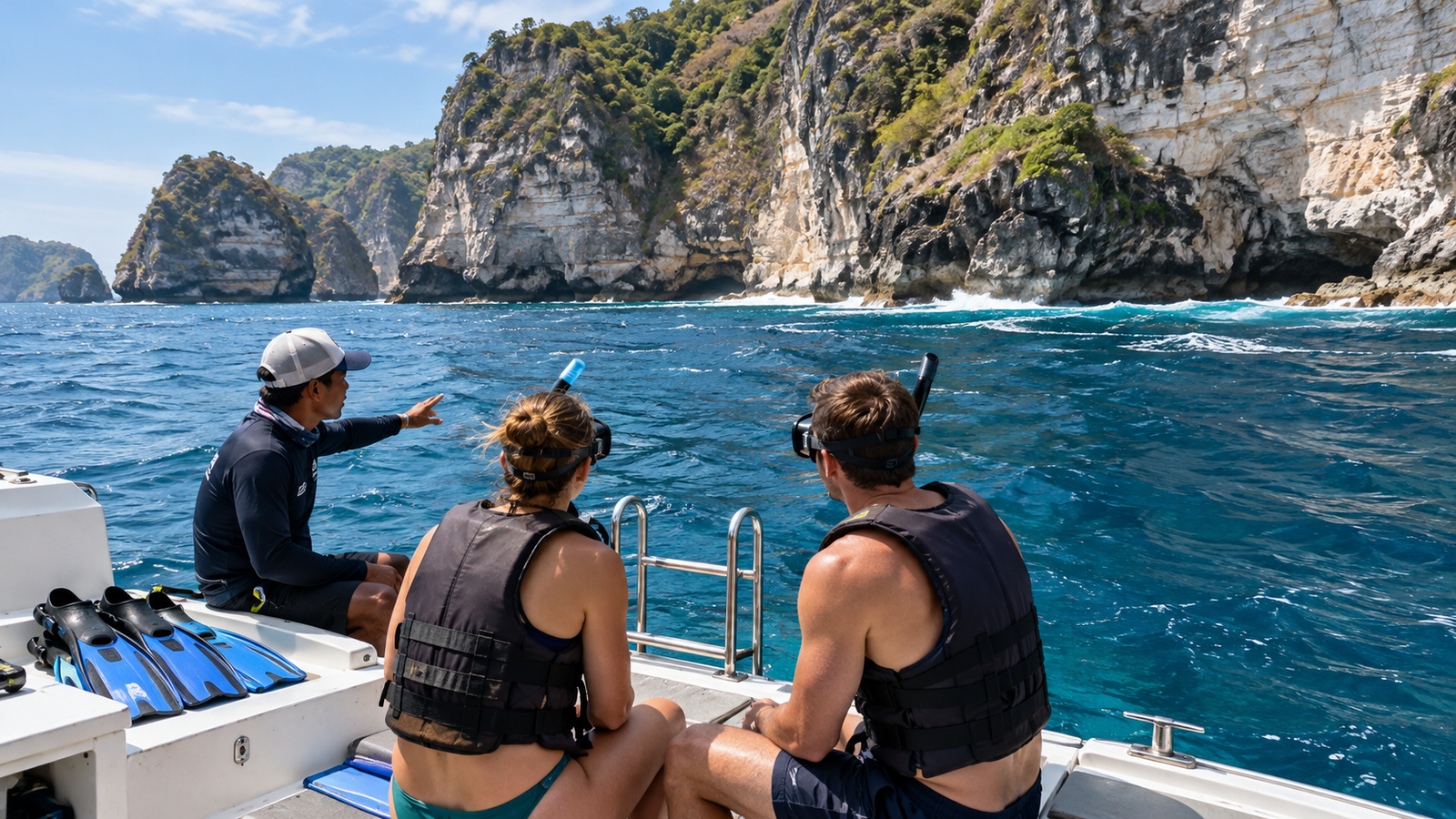
The short Penida-starting trip lists a minimum age of four and suitability for average fitness. That published eligibility language does not certify any particular child or adult as safe for open-water snorkeling. The practical test is whether each person can swim comfortably, follow instructions, board and reboard a moving boat, and cope with the guide’s planned entry conditions. A flotation vest does not eliminate the risks of panic, surge or fatigue.
Before buying for children, non-swimmers, less mobile travelers or anyone prone to severe seasickness, ask the actual water operator—not just a booking intermediary—about supervision, flotation jackets in suitable sizes, crew-to-guest arrangements, entry ladders, sea conditions, and whether a guest may stay aboard if they decide not to enter. Ask how a tired swimmer signals for help and what the guide’s stop-abandonment procedure is. None of these operational details was independently verified for each boat in the merchant catalog.
The listed local outing includes basic snorkel gear and a guide but excludes transfer, meals and insurance; the product’s inclusions section makes that distinction explicit. The Bali-day listing includes additional boat travel and lunch but excludes wetsuits, some transfers and a separately listed island arrival charge. If you need prescription masks, an appropriately fitted flotation device or warmer protection, obtain written confirmation rather than assuming that “equipment included” covers every requirement.
The day from Bali is longer than the snorkeling session
In the specific MyBaliTrips Bali-day example, travelers check in at the Maruti office at Sanur, take an advertised morning fast boat to Penida, meet the snorkeling team, eat lunch and return by another sailing. The itinerary currently displays a 7:30 a.m. Sanur departure and a 4:30 p.m. Penida return, but those are itinerary examples, not a verified timetable for your date; the same page tells travelers to confirm return seats. A late hotel pickup or delayed arrival changes far more than the published in-water duration.
Work backward from the confirmed return check-in, not just the stated tour finish. Allow for the drive from your accommodation to Sanur, port formalities, both boat journeys, meeting the local guide, changing clothes, transfers to the snorkeling vessel, lunch and reboarding. A combined snorkeling-and-west-coast-land package reduces usable time at either the reefs or the viewpoints. For decisions about which land coast and how many nights to devote to sightseeing, that is a separate itinerary-planning question; do not treat a combined package as two full tours.
The same Bali-package description warns that return boarding can involve shallow water at low tide and suggests suitable water footwear. Check the actual accessibility of the pier or beach boarding point for your group, especially with children or mobility constraints. A traveler who wants minimal transfer friction may be better off sleeping on Penida before the boat outing instead of chaining several time-sensitive transfers into one day.
Cost the full outing, not just the snorkeling ticket
For an island-based booking, the practical budget is snorkeling ticket + transport to meeting point + any missing gear or personal expenses + applicable access charges. For a Bali-origin package, include Bali hotel-to-port transfer + Bali–Penida return ticket (if not bundled) + local snorkeling boat + meal + visitor levy + extras. Compare the items using each specific product’s inclusion list so that you neither double-pay for a boat nor assume an unlisted transfer is free.
On 14 October 2026, the Bali-origin package listed a Nusa Penida government arrival levy of Rp 25,000 per person among its exclusions and said transfer surcharges must be checked with the manager. Treat those as dated merchant disclosures, not a universally applicable, independently certified fee for every visitor or ticket type. Ask whether the arrival charge is already included in your selected booking and what amount is collected on the day. The locally departing snorkeling-only page has a different inclusion list; do not transplant this charge blindly.
Cancellation is particularly important when weather controls the outing
The Penida-starting Manta Bay page states that a traveler cancellation at least 24 hours in advance normally incurs a 10% deduction. Crucially, its weather section states that a weather-canceled trip is rescheduled rather than refunded, while also promising a full refund if the provider cannot deliver the agreed service. Those clauses could matter very differently to someone staying on the island for only one afternoon.
A different Bali-departure product page describes a 24-hour cancellation window with a 10% deduction and full refund when the provider cannot deliver the service. The separate descriptions should not be merged into a blanket promise about all snorkeling variants. Request a written, ticket-specific answer for unsafe sea conditions, a changed manta stop, missed incoming fast boat, bad visibility, personal illness and a total operator cancellation. Also ask which portion, if any, applies to your round-trip ferry seats. Merchant customer service processes the booking; the marine operator determines conditions and water access; the ferry carrier controls the sea crossing.
Respecting manta rays is part of choosing a responsible guide
Mantas are wild animals, not performers. The Manta Trust’s evidence-based snorkeling guidelines say to enter quietly well away from an animal, remain at least three meters back, keep its path clear, never chase and never touch. Ask whether the guide gives this briefing and will limit pursuit or crowding around a manta. Feeding marine animals for a photograph is not a responsible substitute for patient observation.
Indonesia’s Ministry of Marine Affairs and Fisheries reports that Nusa Penida and the Gili Matra islands received international particularly sensitive sea area recognition in 2024. That conservation designation is context for minimizing disturbance, not proof that a particular boat’s practices or safety standards have been independently audited. Prefer a crew that will explain both guest safety and wildlife etiquette even if the best photographic opportunity is missed.
Five questions to settle before confirming a seat
- Where do I start and return? Obtain exact Sanur or Penida meeting location, ferry operator where applicable, local coordinator number and return sailing confirmation.
- Which manta site is planned? Have the operator spell out Manta Bay versus Manta Point, other stops and substitutes when conditions change.
- Can my group safely participate? Confirm swimming level, child policy, flotation, entry/reboarding method, guide support and the option to remain on the boat.
- What is payable separately? Check hotel transfers, any levy, food, wetsuit, equipment fit and the precise refundable portion of bundled transport.
- What if the ocean changes the plan? Get the reschedule/refund and communication procedure in writing for the exact snorkeling product.
For conditions nearer departure, consult Indonesia’s BMKG forecast for Nusa Penida harbor and the local operator. A harbor forecast is useful context but does not certify safe conditions at exposed Manta Point. Follow the actual vessel operator’s and harbor authority’s decisions rather than trying to infer swimming safety from a single weather icon.
This article contains an affiliate link. BookOutdoorTrips may earn a commission if a booking is made through it; our recommendations are based on editorial research rather than a firsthand tour.
If a boat-based itinerary fits your swimming ability and schedule, compare the current snorkeling formats on MyBaliTrips and request the exact itinerary, total payable costs and weather terms before making a payment. Booking a longer or more expensive manta tour cannot buy a guaranteed sighting.
Research note: Named merchant snorkeling listings, Indonesian tourism/conservation information, marine guidance and BMKG resources were checked on 14 October 2026. Prices, departure slots, sea conditions, site access and cancellation terms can change by product and date. No current water clearance, first-hand snorkeling experience or live boat inventory is asserted here.